Closely fought Deputy Secretary-General elections slows substantive work for two days
Week 1 of Plenipot is meant to be about high-level policy statements and election campaigns and voting for the various ITU positions, with foreign affairs folks flying in to conduct bilateral meetings (bilats) with other foreign affairs folks to reach agreement on who will vote for who in the elections. Sometimes there are written agreements about this. Sometimes it’s verbal. Sometimes it’s about agreeing to vote swap equally among two roles up for election at ITU. Sometimes it’s about agreeing to swap a vote for an ITU role for a vote in a different UN agency vote.
With almost 180 Member States at Plenipot in Doha, that’s a lot of bilats, and a lot of intricate vote swapping arrangements being decided. Especially since, as votes are secret, in the end, the delegate casting the vote for the country may end up voting differently on the day to the formal agreement their country made with a different country. It’s like Game of Thrones, only with bilats and different colours of ballot papers instead of swords and dragons.
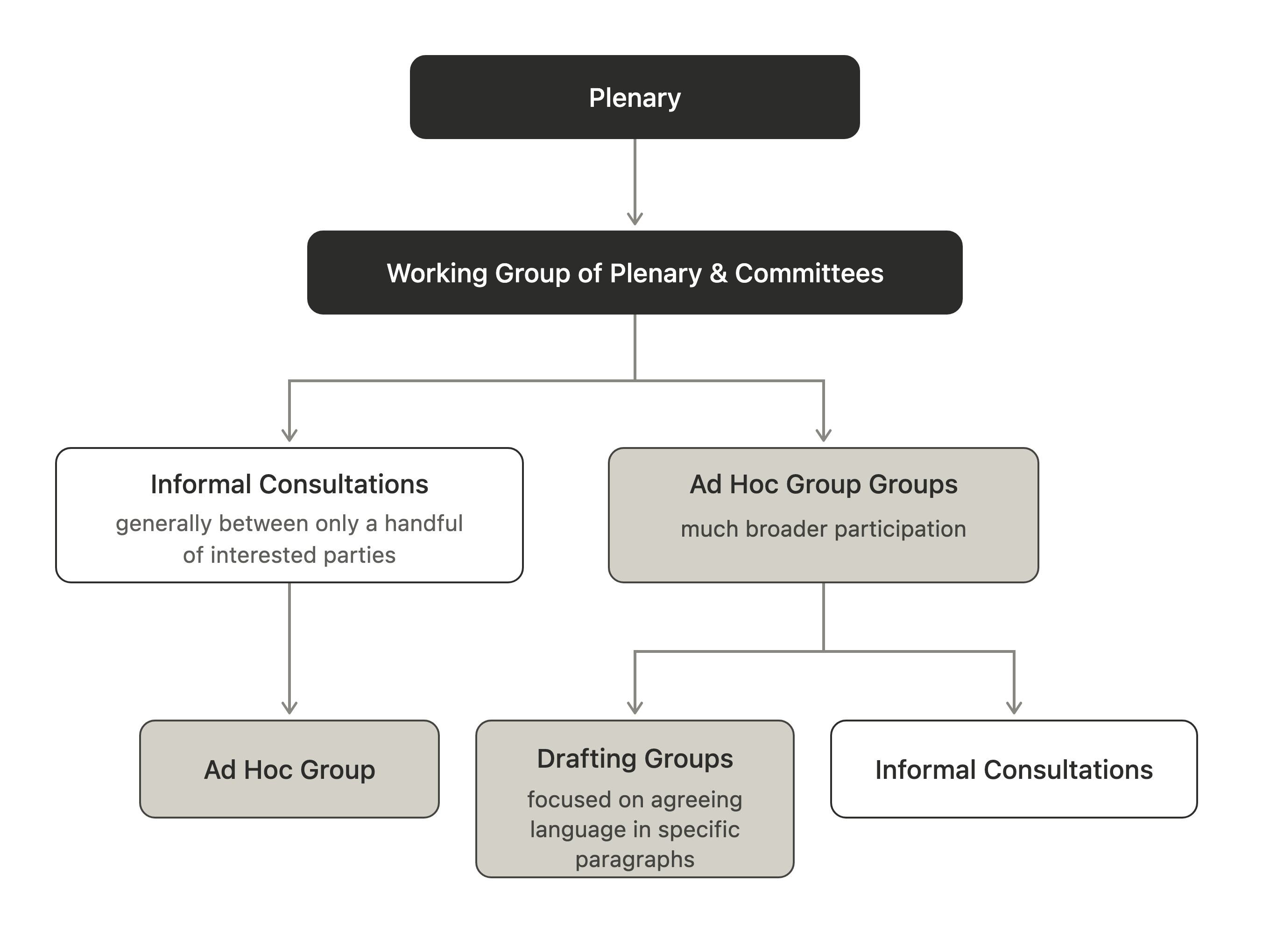
This Plenipot was even more complicated, with the votes for the three candidates for Deputy Secretary-General being pretty much evenly split between the three, requiring a total of four separate voting processes. And whenever there’s an election process, nothing else can take place in parallel. Hence the Working Group of Plenary (WG-PL) and various Committees could not meet to spin off the rest of the resolutions under their remit into Ad Hoc Groups, and the existing Ad Hoc Groups, spun out of Committees and the WG-PL, could not meet to begin their work, either.
The rules of the conference meant there needed to be six hours between votes (unless the delegates decided otherwise, and there was a bit of debate surrounding that after the second vote on Thursday afternoon), and a lot of that time was needed by Member States to caucus amongst themselves to see if they could rearrange how they were voting, and if they were lucky and in a time zone where their capital was awake, seek advice from there, too.
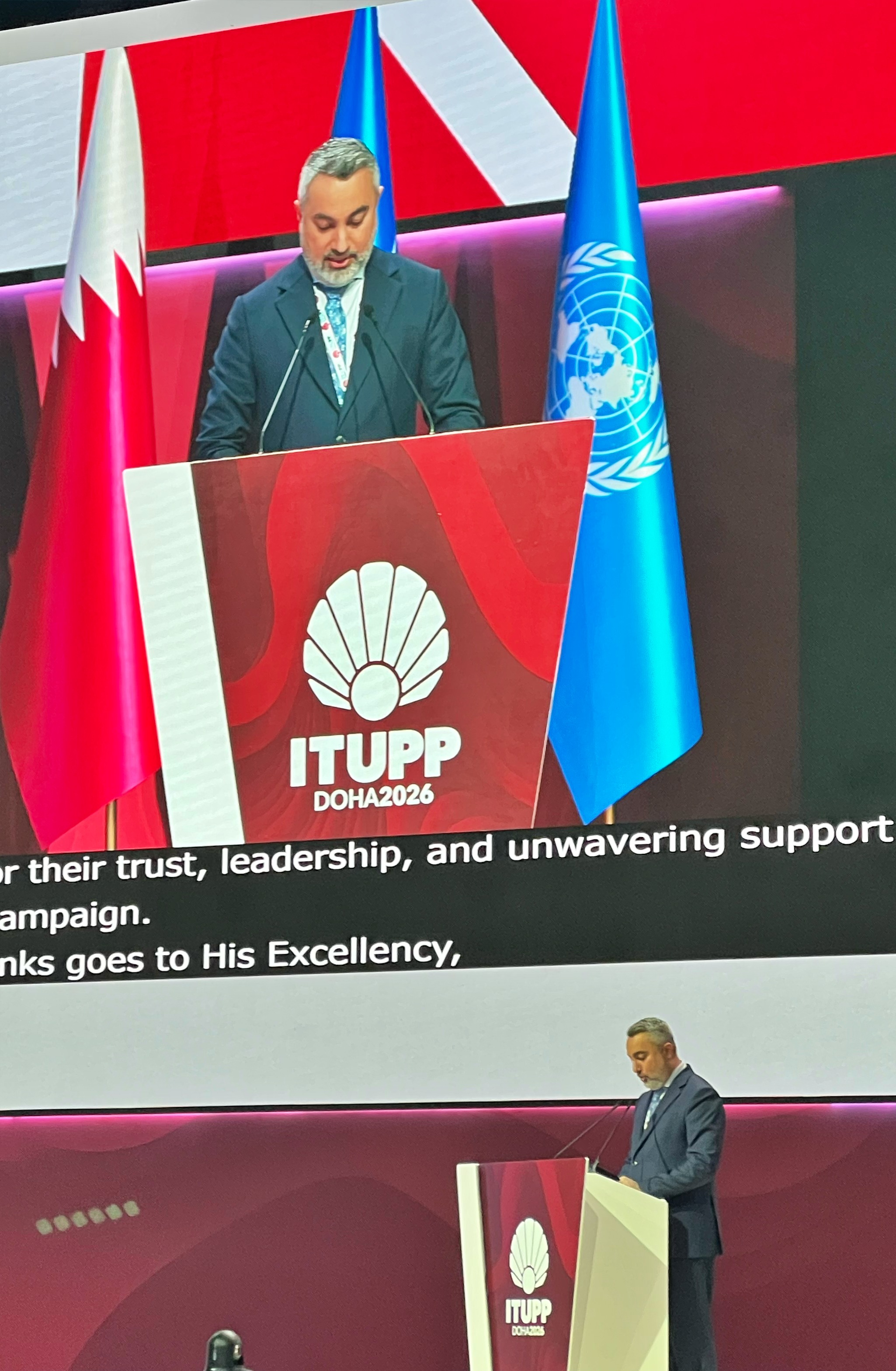 Four votes later, we finally had a Deputy Secretary-General: Adel Darwish (Bahrain)
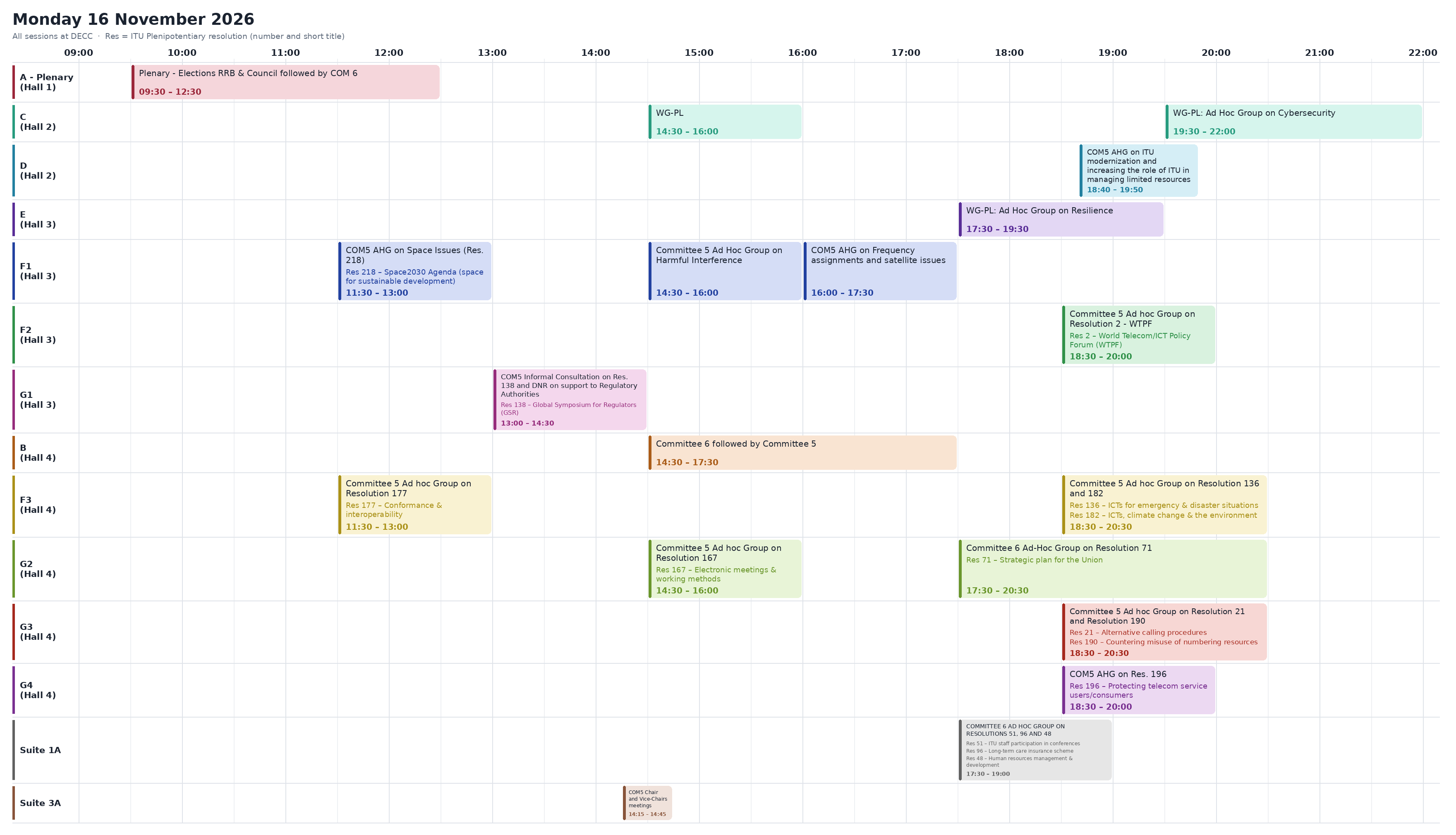
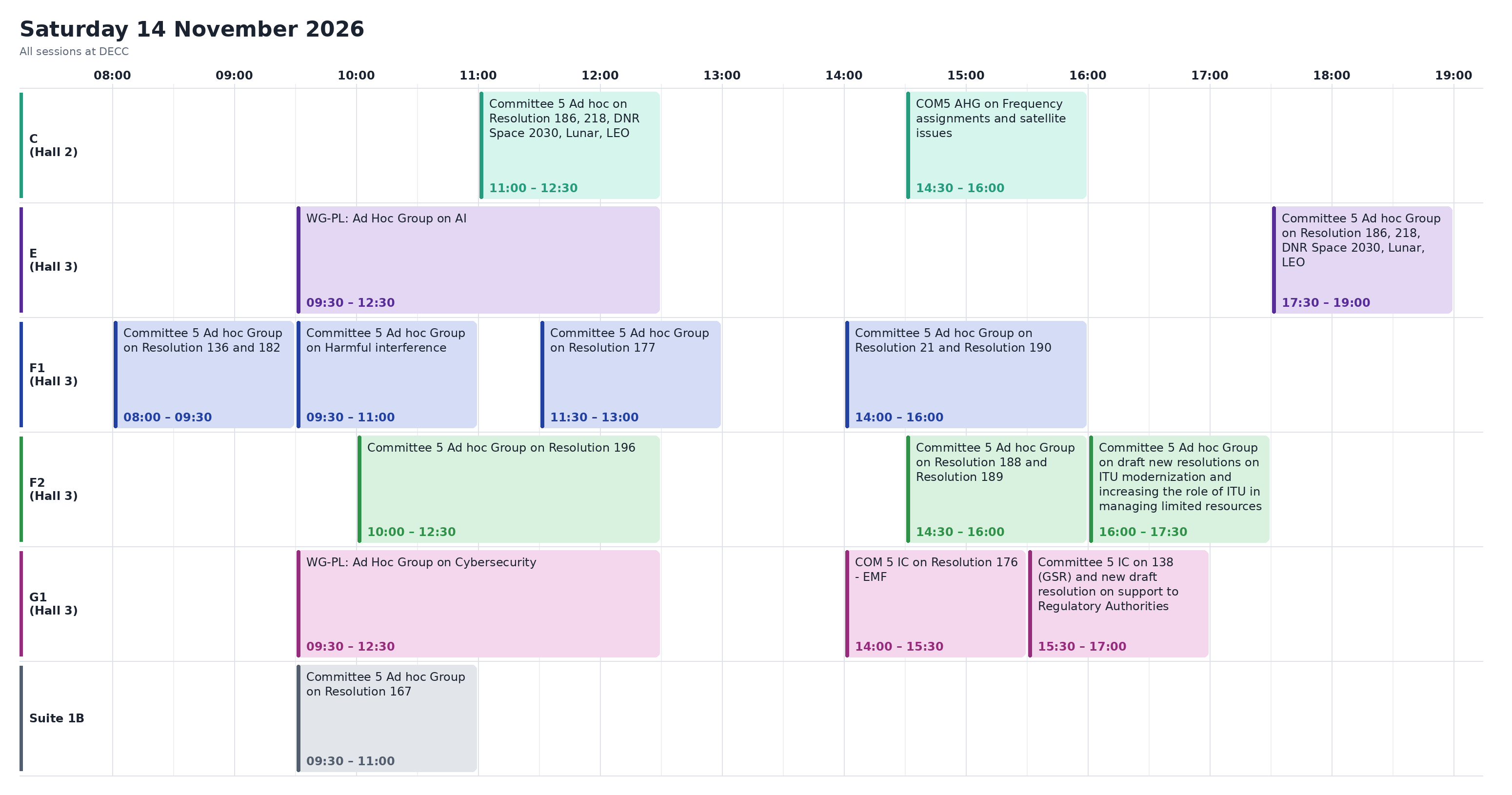
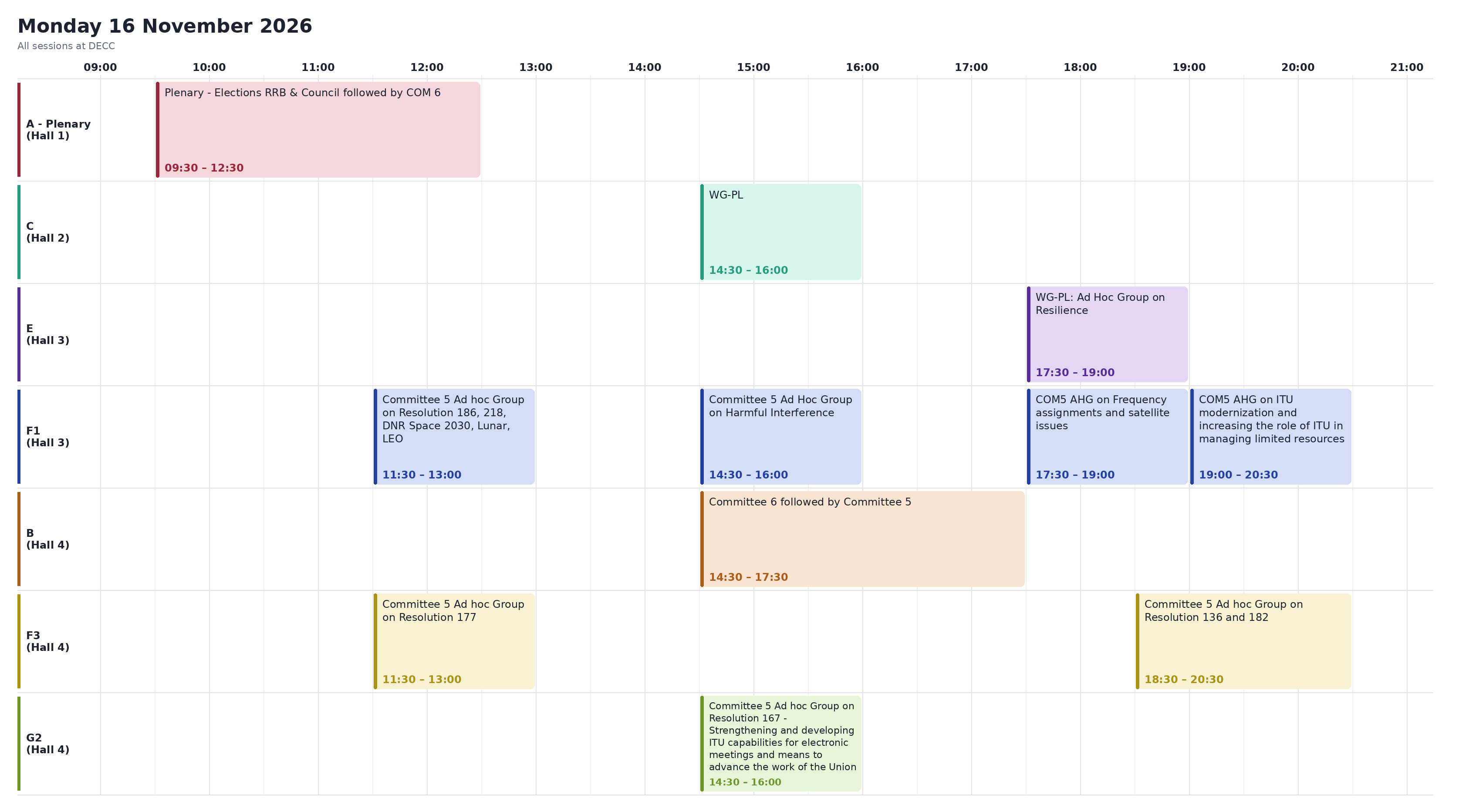
The upshot was that while the record number of proposals at this Plenipot meant the substantive work of the Plenipot need to start early in Week 1, instead of the planned start in Week 2, the unexpected requirement to hold three more voting rounds than planned in Week 1 meant all that substantive work could not begin in earnest, but has now piled up, in a very confusing multi-lane policy traffic jam, meaning Week 2 will be truly hectic.
A silver lining to the extended election process
Despite governments knowing better, from past experience at previous Plenipots where negotiations have also needed to start in Week 1, many delegations have chosen not to send their technical experts to Doha until Week 2, when the negotiations were officially meant to begin. Meaning any discussion in Ad Hoc Groups that took place in Week 1 were likely to have to be relitigated once the experts fly in. At least with very little substantive discussion able to happen in Week 1 in Doha, the relitigating should be kept to a minimum.
But storm clouds remain, with lots to discuss and not much time to do it in
Theoretically, all resolutions should be agreed by the end of Week 2, to give the translation committee time to assess the translations of the resolutions into all six UN languages and make sure there are no inadvertent divergences between the different translations of the same resolution. In reality, this deadline is likely to be utterly impossible to meet, and I would not be surprised if the entire Plenary is left trying to settle at least one highly contentious resolution late at night on the final Thursday.
The planned work hours of the conference are likely to be thrown out the window as delegations try to balance multiple parallel Ad Hoc Groups with not enough delegates to cover them all. The only way to reduce the number of parallel tracks is to increase the length of the working days. Right now, evening sessions are ending at 10 pm, but this is likely to extend later into the night as the week progresses.
This is highly problematic for small delegations, who have only a handful of representatives here in Doha, to cover the entire day, from what might end up being a day stretching from 7 or 7:30 am, through to possibly midnight. No amount of caffeine will make up for the sheer lack of sleep such long and demanding days of detailed and complex negotiations will cause.
It’s also highly problematic for female delegates, since the local host is not required as part of the host country agreement to provide shuttle buses back to the official hotels (and many of the official hotels never had shuttle buses to start with), meaning women are often having to walk back in the dead of night, possibly by themselves, given for many developing country delegations, there is simply not the budget to pay for daily taxi, Uber or similar services.
So wish us all luck…
Member States chose to submit the 400-odd proposals for this Plenipot, so have brought this overwhelming workload on themselves. I doubt however that many, if any, governments pay their staff overtime for working these crazy hours for three weeks, so please spare a thought for the delegates, as individual people, trying their best to represent their governments, balance their governments’ positions with those of other governments, all while becoming so tired by the end of a week that their vision starts to blur.